Discover the latest breakthroughs in cellular mechanisms that are revolutionizing our understanding of diseases. Stay informed and ahead of the curve.
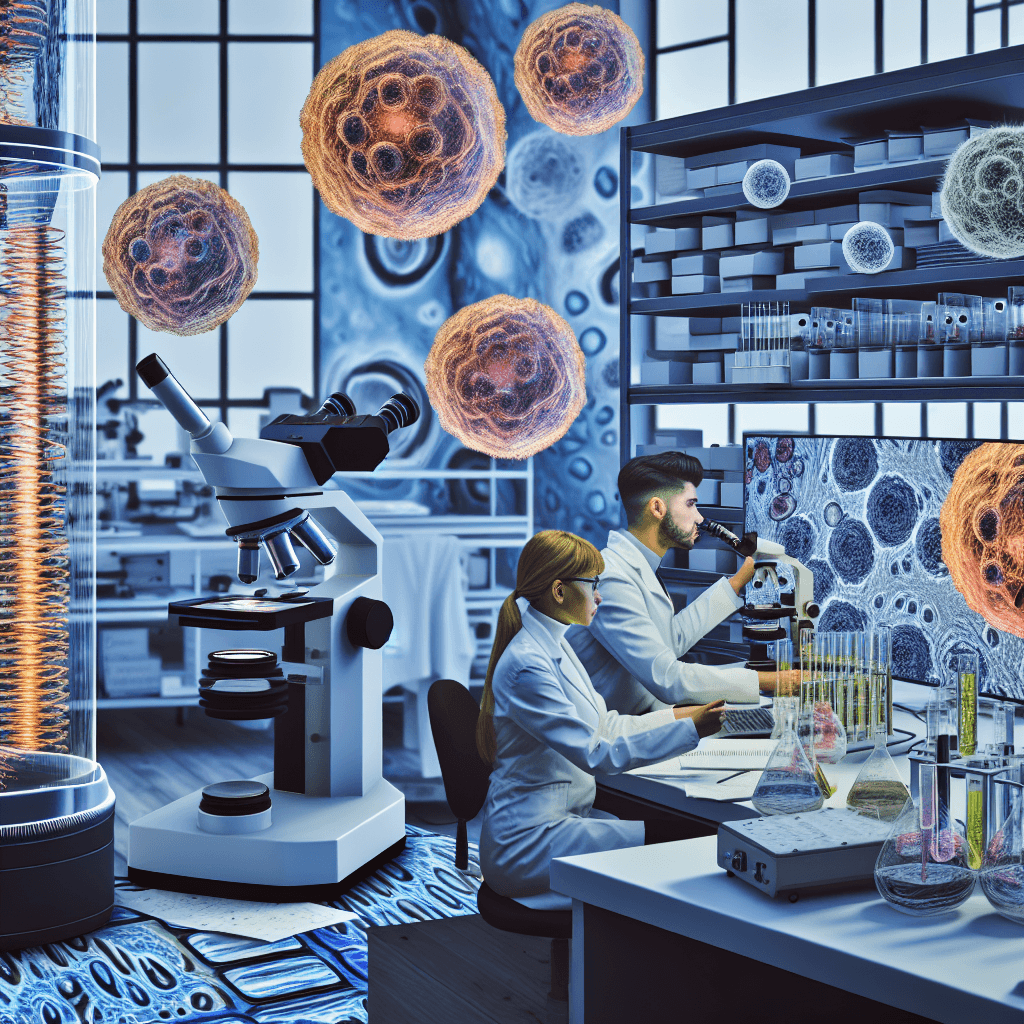
Table of Contents
“Unlocking the secrets of cellular mechanisms for a deeper understanding of disease.”
Introduction
Cellular mechanisms play a crucial role in understanding and treating diseases. Over the years, there have been significant breakthroughs in this field, leading to a better understanding of the underlying causes of various diseases. These breakthroughs have paved the way for the development of new treatments and therapies, ultimately improving the overall health and well-being of individuals. In this introduction, we will explore some of the most significant breakthroughs in cellular mechanisms that have enhanced our understanding of diseases.
Advancements in Single-Cell Analysis Techniques for Disease Research
In recent years, there have been significant breakthroughs in the field of cellular mechanisms that have greatly enhanced our understanding of various diseases. One of the key factors in these advancements is the development of single-cell analysis techniques. These techniques allow researchers to study individual cells in a more detailed and precise manner, providing valuable insights into the underlying mechanisms of diseases.
Traditionally, disease research has focused on studying bulk tissue samples, which provide an average representation of the cells present in a particular tissue. However, this approach overlooks the fact that each cell is unique and may play a different role in disease development. With the advent of single-cell analysis techniques, researchers can now study individual cells and their interactions, providing a more comprehensive understanding of disease mechanisms.
One of the most significant advancements in single-cell analysis techniques is the development of single-cell RNA sequencing (scRNA-seq). This technique allows researchers to analyze the gene expression profiles of individual cells, providing insights into the specific genes and pathways involved in disease development. This has been particularly useful in the study of complex diseases such as cancer, where different cell types within a tumor may have distinct gene expression patterns.
Another breakthrough in single-cell analysis techniques is the development of mass cytometry, also known as CyTOF (Cytometry by Time-Of-Flight). This technique combines the high-throughput capabilities of flow cytometry with the high-dimensional analysis of mass spectrometry, allowing for the simultaneous measurement of multiple parameters in individual cells. This has been particularly useful in the study of immune cells, where the heterogeneity of cell populations can be better understood through the analysis of multiple markers.
In addition to these techniques, advancements in imaging technologies have also greatly contributed to our understanding of cellular mechanisms in disease. For instance, super-resolution microscopy techniques such as stimulated emission depletion (STED) microscopy and structured illumination microscopy (SIM) have enabled researchers to visualize cellular structures and processes at a higher resolution than ever before. This has been particularly useful in the study of neurodegenerative diseases, where the visualization of protein aggregates and their interactions with cellular structures has provided valuable insights into disease progression.
Furthermore, the development of microfluidic devices has revolutionized the way single-cell analysis is performed. These devices allow for the isolation and manipulation of individual cells, making it easier to study their behavior and responses to different stimuli. This has been particularly useful in the study of rare cell populations, such as circulating tumor cells, which are difficult to isolate and study using traditional techniques.
The advancements in single-cell analysis techniques have also led to the development of new computational tools and algorithms for data analysis. With the large amounts of data generated from these techniques, it is crucial to have efficient and accurate methods for data processing and interpretation. These tools have enabled researchers to identify novel cell types and subpopulations, as well as potential biomarkers for disease diagnosis and treatment.
In conclusion, the advancements in single-cell analysis techniques have greatly enhanced our understanding of cellular mechanisms underlying various diseases. These techniques have allowed for a more detailed and precise analysis of individual cells, providing valuable insights into disease development and progression. With further advancements and integration of these techniques, we can expect to see even more breakthroughs in disease research, leading to improved diagnostic and treatment strategies for various diseases.
Uncovering the Role of Epigenetics in Disease Development

In recent years, there have been significant breakthroughs in our understanding of the cellular mechanisms involved in disease development. One area that has garnered particular attention is the role of epigenetics. Epigenetics refers to changes in gene expression that do not involve alterations in the underlying DNA sequence. These changes can be influenced by a variety of factors, including environmental exposures, lifestyle choices, and even psychological stress. By uncovering the role of epigenetics in disease development, researchers are gaining a deeper understanding of how diseases develop and progress, and are paving the way for new and more effective treatments.
One of the key ways in which epigenetics influences disease development is through its impact on gene expression. Genes are the instructions for making proteins, which are essential for the proper functioning of our cells. However, not all genes are active at all times. Epigenetic modifications can turn genes on or off, thereby altering the production of proteins and potentially leading to disease. For example, in cancer, certain genes that are responsible for controlling cell growth may become silenced through epigenetic mechanisms, allowing the cells to grow and divide uncontrollably.
Another important aspect of epigenetics is its ability to influence the development of chronic diseases. Chronic diseases, such as diabetes, heart disease, and Alzheimer’s, are complex and multifactorial, meaning that they are influenced by a combination of genetic and environmental factors. Epigenetics plays a crucial role in this interplay, as it can modify the expression of genes that are involved in disease pathways. For instance, in diabetes, epigenetic changes can affect the production of insulin, the hormone responsible for regulating blood sugar levels. By understanding these epigenetic changes, researchers can develop targeted treatments that address the underlying causes of these diseases.
Moreover, epigenetics has also been linked to the development of mental health disorders. Studies have shown that epigenetic modifications can influence the expression of genes involved in brain development and function, and disruptions in these processes can contribute to the development of conditions such as depression, anxiety, and schizophrenia. This has opened up new avenues for research and potential treatments for these disorders. For instance, some studies have shown that certain medications used to treat mental health disorders may work by altering epigenetic processes in the brain.
In addition to its role in disease development, epigenetics has also shed light on the potential for disease prevention. Unlike genetic mutations, which are permanent and cannot be changed, epigenetic modifications are reversible. This means that by identifying and understanding the environmental and lifestyle factors that can influence epigenetic changes, we may be able to prevent or even reverse the development of certain diseases. For example, studies have shown that a healthy diet and regular exercise can positively impact epigenetic processes, leading to a reduced risk of chronic diseases.
However, while the potential of epigenetics in disease understanding and treatment is promising, there are still many challenges to overcome. One of the main challenges is the complexity of epigenetic processes and their interactions with other factors. Additionally, there is still much to be learned about the specific mechanisms by which epigenetics influences disease development. Nevertheless, with continued research and advancements in technology, we are making significant strides in unraveling the mysteries of epigenetics and its role in disease.
In conclusion, the breakthroughs in cellular mechanisms, particularly in the field of epigenetics, have greatly enhanced our understanding of disease development. By uncovering the role of epigenetics in gene expression, chronic diseases, mental health disorders, and disease prevention, we are gaining valuable insights into the underlying causes of these conditions. This knowledge is crucial for the development of targeted and effective treatments, and has the potential to greatly improve the lives of those affected by disease. As we continue to delve deeper into the world of epigenetics, we are sure to uncover even more groundbreaking discoveries that will revolutionize our understanding and treatment of diseases.
The Impact of CRISPR-Cas9 Technology on Studying Cellular Mechanisms
The study of cellular mechanisms has long been a crucial aspect of understanding diseases and developing effective treatments. However, the complexity of these mechanisms has posed a significant challenge for researchers. In recent years, the development of CRISPR-Cas9 technology has revolutionized the field, providing a powerful tool for studying cellular mechanisms and enhancing our understanding of diseases.
CRISPR-Cas9 is a gene editing tool that allows for precise and efficient modifications of DNA sequences. It is based on a natural defense mechanism found in bacteria, where CRISPR-Cas9 acts as a molecular scissor to cut and edit foreign DNA. This technology has been adapted for use in various organisms, including human cells, and has quickly become a game-changer in the field of cellular biology.
One of the most significant impacts of CRISPR-Cas9 technology on studying cellular mechanisms is its ability to target specific genes and make precise modifications. This level of precision was previously unattainable, as other gene editing techniques were often limited by off-target effects and low efficiency. With CRISPR-Cas9, researchers can now target and modify specific genes with unprecedented accuracy, allowing for a deeper understanding of their function and role in diseases.
Moreover, CRISPR-Cas9 has also made it possible to study multiple genes simultaneously, which was previously a time-consuming and challenging task. This has opened up new avenues for research, as scientists can now investigate the interactions between different genes and their impact on cellular mechanisms. This has been particularly useful in studying complex diseases with a genetic component, such as cancer and neurological disorders.
Another significant advantage of CRISPR-Cas9 technology is its versatility. It can be used not only to edit genes but also to regulate their expression. This is achieved by using a modified version of the Cas9 enzyme, which can bind to specific DNA sequences without cutting them. This allows for precise control of gene expression, which is crucial in understanding the role of different genes in cellular mechanisms and diseases.
Furthermore, CRISPR-Cas9 has also been instrumental in developing disease models for research purposes. By using this technology, researchers can introduce disease-causing mutations into cells and study their effects. This has been particularly useful in studying rare genetic diseases, where traditional methods of creating disease models were often challenging and time-consuming.
In addition to its impact on studying cellular mechanisms, CRISPR-Cas9 technology has also played a crucial role in drug discovery and development. By using this technology, researchers can identify potential drug targets and test the efficacy of new drugs in disease models. This has significantly accelerated the drug development process, as it allows for a more targeted and efficient approach.
Moreover, CRISPR-Cas9 has also been used in high-throughput screening, where thousands of genes can be simultaneously targeted and studied for their role in diseases. This has been particularly useful in identifying new drug targets and understanding the mechanisms of drug resistance.
Despite its numerous advantages, CRISPR-Cas9 technology is not without its limitations. One of the main challenges is the potential for off-target effects, where the Cas9 enzyme may unintentionally edit other genes. However, ongoing research is focused on improving the specificity of this technology to minimize these effects.
In conclusion, CRISPR-Cas9 technology has had a significant impact on studying cellular mechanisms and enhancing our understanding of diseases. Its precision, versatility, and ability to study multiple genes simultaneously have opened up new possibilities for research and drug development. As this technology continues to evolve and improve, it is expected to play an even more significant role in advancing our understanding of cellular mechanisms and developing effective treatments for diseases.
Emerging Technologies for Studying Protein Interactions in Disease Pathways
The study of protein interactions in disease pathways has long been a challenging and complex field. However, recent advancements in technology have allowed for breakthroughs in understanding the cellular mechanisms involved in various diseases. These emerging technologies have provided researchers with new tools and techniques to study protein interactions, leading to a deeper understanding of disease processes and potential treatments.
One of the most significant breakthroughs in this field is the development of high-throughput screening methods. This technology allows for the rapid screening of large numbers of compounds or proteins, providing researchers with a vast amount of data in a short period. This has been particularly useful in studying protein interactions, as it allows for the identification of potential drug targets and the screening of compounds for their ability to disrupt these interactions.
Another emerging technology that has revolutionized the study of protein interactions is mass spectrometry-based proteomics. This technique allows for the identification and quantification of proteins in a sample, providing researchers with a comprehensive view of the protein landscape in a particular disease state. This has been crucial in understanding how proteins interact with each other and how these interactions may be altered in disease.
In addition to these high-throughput methods, advancements in imaging technologies have also played a significant role in enhancing our understanding of protein interactions in disease pathways. Super-resolution microscopy, for example, has allowed for the visualization of protein complexes at the nanoscale level. This has provided researchers with a more detailed view of how proteins interact with each other and how these interactions may be altered in disease.
Furthermore, the development of single-molecule imaging techniques has also been a game-changer in this field. This technology allows for the visualization of individual molecules in real-time, providing researchers with a dynamic view of protein interactions. This has been particularly useful in studying the kinetics of protein interactions and how they may be affected by disease-related factors.
Another emerging technology that has shown great promise in studying protein interactions is cryo-electron microscopy (cryo-EM). This technique allows for the visualization of protein structures at near-atomic resolution, providing researchers with a detailed view of how proteins interact with each other. This has been crucial in understanding the structural basis of protein interactions and how they may be altered in disease.
Moreover, advancements in computational methods have also played a significant role in enhancing our understanding of protein interactions in disease pathways. With the increasing amount of data generated from high-throughput screening and imaging technologies, computational tools have become essential in analyzing and interpreting this data. These tools allow for the identification of patterns and relationships between proteins, providing researchers with valuable insights into disease mechanisms.
One of the most exciting developments in this field is the use of artificial intelligence (AI) and machine learning algorithms to study protein interactions. These technologies can analyze vast amounts of data and identify patterns that may not be apparent to the human eye. This has been particularly useful in identifying novel protein interactions and potential drug targets in various diseases.
In conclusion, the emerging technologies for studying protein interactions in disease pathways have provided researchers with powerful tools to enhance our understanding of disease mechanisms. These advancements have allowed for the identification of new drug targets and the development of potential treatments for various diseases. As technology continues to evolve, we can expect even more breakthroughs in this field, leading to a deeper understanding of cellular mechanisms and improved treatments for diseases.
Q&A
1. What are some recent breakthroughs in cellular mechanisms that have enhanced our understanding of diseases?
Some recent breakthroughs include the discovery of CRISPR-Cas9 gene editing technology, which allows for precise manipulation of cellular DNA, and the development of organoids, which are miniature versions of organs grown in a lab for studying disease processes. Additionally, advancements in single-cell sequencing technology have allowed for a deeper understanding of the genetic and molecular changes that occur in individual cells during disease progression.
2. How has the discovery of CRISPR-Cas9 impacted disease research?
The discovery of CRISPR-Cas9 has revolutionized disease research by providing a powerful tool for editing and manipulating cellular DNA. This technology has allowed for more precise and efficient gene editing, making it easier to study the effects of specific genetic mutations on disease development. It has also opened up new possibilities for potential treatments and cures for genetic diseases.
3. What are organoids and how have they contributed to our understanding of diseases?
Organoids are miniature versions of organs grown in a lab from stem cells. They mimic the structure and function of real organs, making them valuable tools for studying disease processes. Organoids have allowed researchers to observe how diseases develop and progress at the cellular level, providing insights into potential treatments and personalized medicine approaches.
4. How has single-cell sequencing technology advanced our understanding of diseases?
Single-cell sequencing technology has allowed researchers to analyze the genetic and molecular changes that occur in individual cells during disease progression. This has provided a more detailed and comprehensive understanding of the complex mechanisms underlying diseases, such as cancer. It has also allowed for the identification of new disease subtypes and potential therapeutic targets.
Conclusion
In recent years, there have been significant breakthroughs in our understanding of cellular mechanisms and their role in disease. These advancements have allowed us to gain a deeper understanding of the underlying causes of various diseases and have opened up new avenues for treatment and prevention. From the discovery of new cellular pathways to the development of advanced imaging techniques, these breakthroughs have revolutionized the field of medicine and have the potential to greatly improve human health. With continued research and innovation, we can expect even more breakthroughs in cellular mechanisms that will enhance our understanding of disease and ultimately lead to better treatments and cures. These advancements are truly remarkable and offer hope for a healthier future for all.